
This article demystifies KrCl excimer lamps by explaining what they are, how they work, why gas mixture quality is foundational to performance, and what makes them a compelling choice over traditional UV sources. Whether you're evaluating far-UVC disinfection systems, optimizing photolithography processes, or investigating dermatological applications, understanding the science behind 222 nm emission is essential.
TLDR
- KrCl excimer lamps generate 222 nm UV light through excited krypton-chlorine complexes that spontaneously decay and release photons
- At filtered 222 nm, pathogens are inactivated at minimal doses without penetrating living human tissue, making these lamps safer than 254 nm mercury lamp alternatives
- Gas mixture purity directly determines lamp efficiency, emission consistency, and operational lifespan
- DBD architecture eliminates electrode corrosion, enabling lifespans exceeding 11,000 hours
- Applications span disinfection, semiconductor manufacturing, water treatment, and medical phototherapy
What Is a KrCl Excimer Lamp?
Defining Excimer and Exciplex Molecules
An excimer lamp (also called an excilamp) is a UV source based on the spontaneous emission of excimer or exciplex molecules. KrCl* is an exciplex—a hetero-nuclear excited complex formed between krypton and chlorine atoms—though "excimer lamp" is the term used broadly in the industry.
The exciplex molecule exists only in a bound, excited electronic state. When KrCl* decays to its ground state (which is unstable and repulsive), it releases stored energy as a UV photon.
Because the ground state is unbound, the molecule dissociates immediately into free krypton and chlorine atoms. This prevents self-absorption of the emitted radiation and enables high conversion efficiencies.
The 222 nm Peak Wavelength
KrCl* emits primarily at 222 nm, placing it firmly in the far-UVC range (200–230 nm) of the UV-C spectrum. Approximately 70–80% of the lamp's radiation concentrates in this primary emission band, with a narrow spectral width (FWHM) typically between 3–8 nm depending on operating pressure.
Unfiltered lamps also emit smaller amounts of longer-wavelength UV from secondary plasma transitions—a detail with significant safety implications discussed later.
How KrCl Differs from Mercury Vapor Lamps
Traditional low-pressure mercury lamps emit at 254 nm, require heating to reach optimal vapor pressure, contain toxic elemental mercury, and produce UV that penetrates more deeply into biological tissue. In contrast, KrCl excimer lamps:
- Contains no mercury whatsoever—eliminating disposal and regulatory concerns
- Reach operating output almost immediately after ignition
- Emit at 222 nm, which is absorbed in the outermost layers of skin and the tear film of the eye
- Offer cooler surface operation (often <50°C)
The Excimer Lamp Family
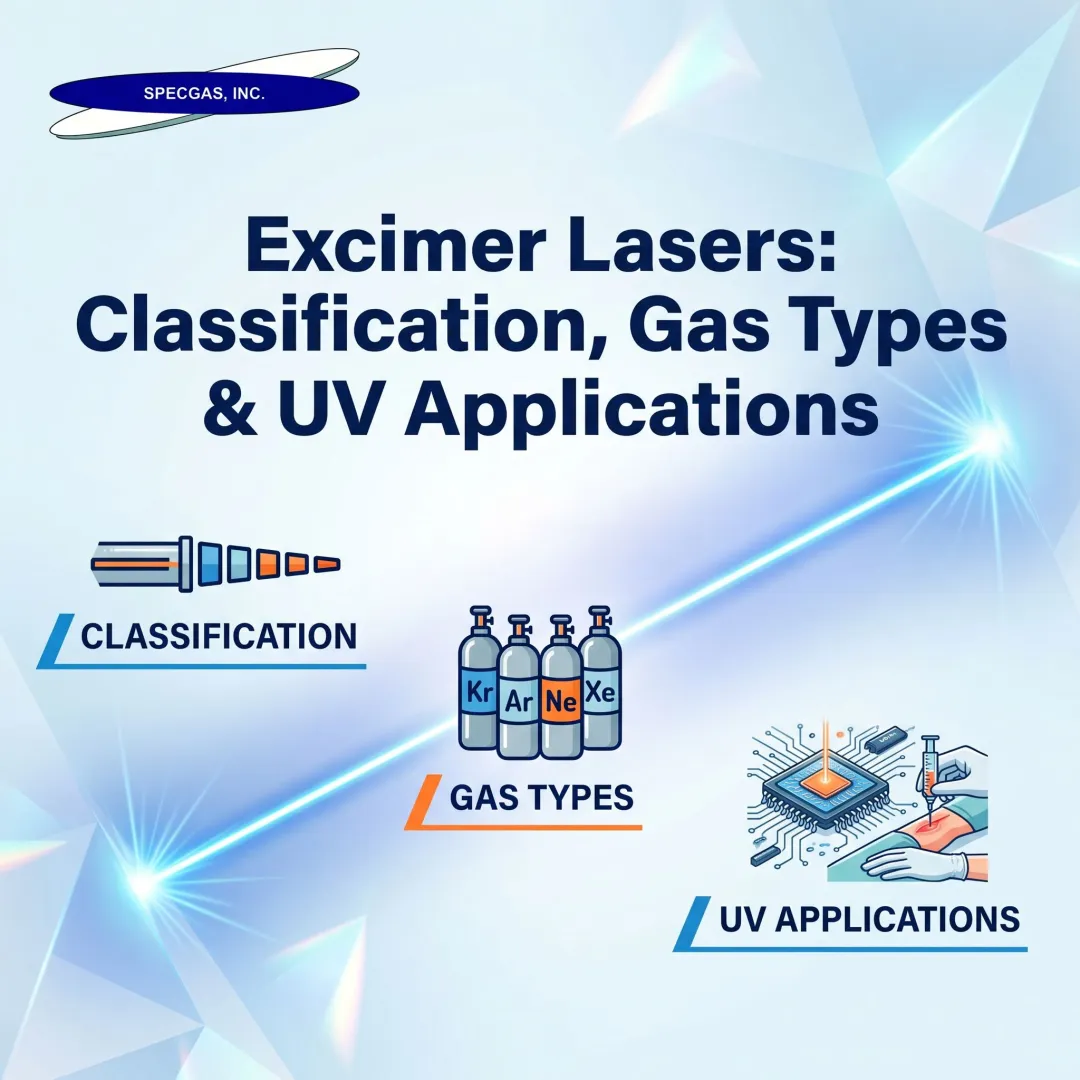
KrCl at 222 nm is part of a broader family of rare-gas halogen emitters, each producing different wavelengths:
| Gas Mixture | Peak Wavelength | Spectral Region | Typical Applications |
|---|---|---|---|
| Xe₂ | 172 nm | Vacuum UV (VUV) | Polymer surface modification, advanced oxidation |
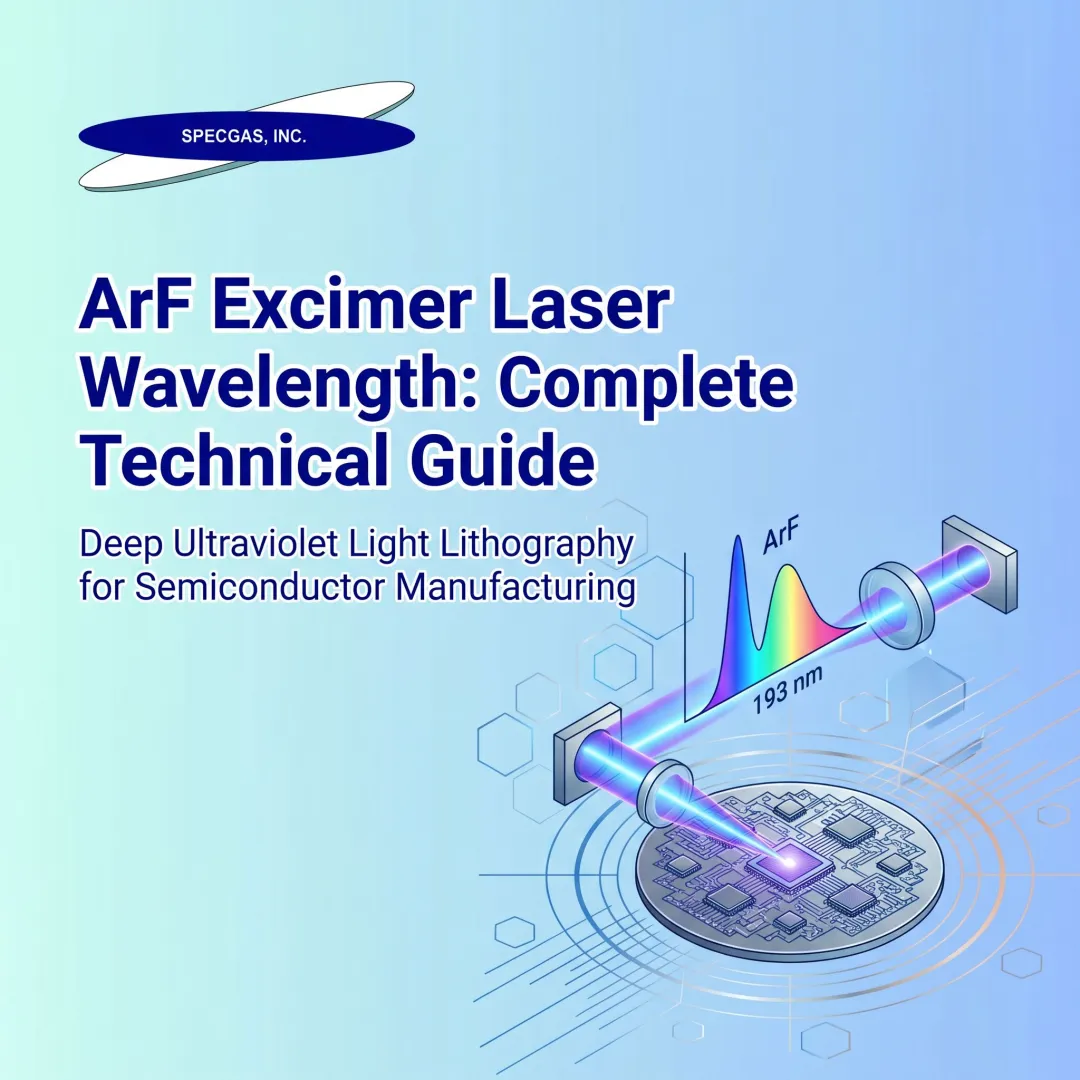
| ArF | 193 nm | Deep UV (DUV) | Semiconductor photolithography |
| KrCl | 222 nm | Far-UVC | Germicidal disinfection, research |
| KrF | 248 nm | Deep UV (DUV) | Photolithography, laser micromachining |
| XeCl | 308 nm | UV-B | Dermatology (psoriasis, vitiligo treatment) |

Each gas pair targets a distinct application window. KrCl at 222 nm is the only wavelength in this family currently under active investigation for use in occupied spaces—a distinction driven by its absorption profile in superficial tissue rather than deeper biological structures.
How KrCl Excimer Lamps Work: The Science Behind 222 nm Emission
Excitation Mechanism: Dielectric Barrier Discharge
Electrical energy—typically via dielectric barrier discharge (DBD)—enters a sealed chamber containing the KrCl gas mixture. DBD configurations separate electrodes from the reactive Kr/Cl₂ gas by a dielectric layer (usually quartz glass), preventing direct electrode-plasma contact. This eliminates electrode corrosion and contamination of the gas medium, extending lamp life compared to arc-discharge designs.
Commercial KrCl modules achieve L70 lifespans (time until output degrades by 30%) exceeding 11,000 hours.
Free electrons in the resulting plasma collide with krypton atoms, producing excited krypton atoms (Kr*) and krypton ions (Kr⁺).
Two Pathways to KrCl* Formation
The KrCl* exciplex forms through two main kinetic pathways operating simultaneously:
1. Harpoon Reaction (dominant at typical operating pressures)
- An excited krypton atom reacts with a chlorine-containing molecule
- Kr* + Cl₂ → KrCl* + Cl
- This electron-transfer reaction dominates at the 10–hundreds of Torr pressures used in commercial DBD lamps
2. Ion-Ion Recombination (becomes significant at higher pressures)
- A krypton ion recombines with a chlorine anion in a three-body collision
- Kr⁺ + Cl⁻ + M → KrCl* + M (where M is a buffer gas atom)
- Requires a third body to stabilize the newly formed exciplex
The balance between these two pathways shifts with operating pressure and gas composition—which is why precise Kr/Cl₂ mixture ratios directly affect lamp output and efficiency.
The Emission Cycle
Once formed, KrCl* exists in its excited B state for only 19 nanoseconds before spontaneously decaying to the repulsive ground state and releasing a 222 nm photon. Because the ground state is unstable, the molecule immediately dissociates back into free Kr and Cl atoms.
This four-step cycle repeats continuously during lamp operation:
- Excitation — electron collisions energize Kr atoms into Kr* or Kr⁺
- Exciplex formation — Kr* or Kr⁺ reacts with Cl-containing species to form KrCl*
- Radiative decay — KrCl* releases a 222 nm photon within ~19 ns
- Dissociation — the unstable ground state breaks apart, freeing Kr and Cl to re-enter the cycle

The dissociation step is what makes this system efficient. Because no stable KrCl ground-state molecules accumulate, emitted photons aren't reabsorbed—a loss mechanism that limits many other lamp technologies. This self-resetting cycle is why KrCl excimer lamps can sustain high UV output over thousands of operating hours.
Why Gas Mixture Purity and Precision Are Critical to KrCl Excimer Lamp Performance
The Role of Precise Gas Ratios
The efficiency of KrCl exciplex formation—and therefore the lamp's UV output intensity, spectral purity, and consistency—is directly determined by gas mixture quality. The ratio of krypton, the chlorine donor (typically Cl₂ or HCl), and a buffer gas (such as neon or argon) must be precise.
Even small deviations can:
- Shift the balance between the harpoon reaction and ion-ion recombination pathways
- Reduce quantum efficiency
- Introduce spectral contamination
Trace Impurities: The Silent Performance Killers
Reactive contaminants—moisture, oxygen, and hydrocarbons—are particularly destructive in excimer lamp fills:
- Trace impurities collisionally deactivate Kr* metastable precursors and KrCl* exciplex molecules before they emit, cutting UV output directly
- Oxygen and moisture react with Cl₂ or HCl, depleting the chlorine available for exciplex formation
- Hydrocarbon contamination polymerizes under UV irradiation, coating internal lamp optics and attenuating output over time
Research and lamp manufacturers require parts-per-million or parts-per-billion purity levels for critical components. Commercial specifications for rare gases (Kr, Ne, Ar) typically demand 99.999% to 99.9999% purity, with moisture and oxygen restricted to <1–5 ppm.
Gas Mixture Stability Over Time: The Adsorption Challenge
Chlorine and its donors are chemically reactive and prone to adsorption onto untreated cylinder walls. Chlorine adsorbs readily onto any surface it contacts, and this wall interaction leads to concentration drift that alters the precise Kr/Cl₂ ratio required for optimal 222 nm output.
Specialty gas mixtures must be prepared and stored under conditions that prevent decomposition or adsorption. This requires specific internal cylinder treatment to maintain concentration accuracy from first use to last, including validated passivation protocols and concentration verification at fill and throughout shelf life.
SpecGas Inc.: Precision Reactive Gas Blending for Excimer Applications
The adsorption and drift challenges described above are precisely why sourcing excimer lamp fill gases requires more than standard blending capability. NIST-traceable reactive gas mixtures demand advanced blending techniques and proprietary cylinder treatment processes that hold concentration stable from first draw to last.
SpecGas Inc. was founded by research chemist Alfred Boehm, who began his career in 1976 at Messer Griesheims Industries. Alfred developed proprietary blending and cylinder treatment methods over decades of R&D before establishing SpecGas in 2001. The company produces excimer laser gas mixtures for photolithography, semiconductor manufacturing, and medical applications, including formulations with krypton, xenon, fluorine, and halogen compounds that require the same exacting standards as KrCl lamp fills.
For reactive chlorine-bearing blends, SpecGas offers a SpecGas Stability Guarantee backed by compatibility and shelf-life studies. Customers sourcing KrCl lamp fill gases or related excimer mixtures benefit from:
- Stable low-ppm and ppb-level concentrations verified by NIST-traceable standards
- Specialized cylinder passivation treatments that minimize chlorine wall interaction
- Stainless steel and aluminum-based cylinder materials selected for halogen compatibility
Key Advantages of KrCl Excimer Lamps Over Traditional UV Sources
Mercury-Free Operation and Environmental Compliance
Unlike low-pressure mercury lamps (the historical standard for 254 nm germicidal UV), KrCl excimer lamps contain no mercury. This eliminates:
- Disposal hazards and environmental contamination risks
- Compliance challenges with global regulations (such as EU RoHS directives and the Minamata Convention)
- Complex end-of-life handling procedures
EU RoHS exemptions for mercury in certain lamp categories expire in 2027 for some applications, accelerating the shift toward mercury-free alternatives.
Quasimonochromatic, Tunable Output
KrCl lamps emit a narrow spectral band (full-width at half-maximum of ~3–8 nm) centered at 222 nm, enabling wavelength-selective photochemical processes that broadband sources cannot achieve. The broader excimer lamp family lets engineers select different gas pairs for different target wavelengths:
- 308 nm — dermatological treatment
- 193 nm — deep-UV photolithography
- 172 nm — advanced oxidation processes
Instant Startup and Cold-Source Operation
Mercury and xenon arc lamps require warm-up time to reach thermal equilibrium and generate significant heat during operation. DBD excimer lamps:
- Reach near-peak output almost immediately after activation (milliseconds)
- Keep radiating surfaces at relatively low temperatures
- Enable rapid on/off cycling without degradation
In pharmaceutical cleanrooms, precision photolithography lines, and occupied spaces, this means process equipment can cycle on demand without waiting for lamp stabilization — or introducing unwanted heat load into controlled environments.
Where KrCl Excimer Lamps Are Used
Far-UVC Disinfection and Infection Control
Research demonstrates that 222 nm radiation inactivates a broad spectrum of airborne and surface pathogens—including drug-resistant bacteria, influenza A, and human coronaviruses—while being primarily absorbed in the stratum corneum (outermost dead skin layer) and tear film at safe exposure doses.
Key findings:
- 99.9% inactivation of aerosolized human coronaviruses (alpha HCoV-229E and beta HCoV-OC43) achieved at doses of just 1.2 to 1.7 mJ/cm²
- Effective against MRSA in superficial wounds with efficacy comparable to 254 nm, but without significant host tissue DNA damage
- Safe for continuous use in occupied spaces when properly filtered

Applications include:
- Hospitals and healthcare facilities (continuous air disinfection)
- Pharmaceutical cleanrooms
- Public transit and ambulances
- Research laboratories
Industrial and Scientific Applications
Semiconductor Manufacturing
Deep-UV excimer sources (KrF at 248 nm, ArF at 193 nm) are the primary light sources for photolithography scanners that pattern microchip circuitry. KrCl at 222 nm is less common here—its longer wavelength limits the resolution achievable in advanced node patterning—but it is gaining traction in photo-enhanced chemical vapor deposition and surface conditioning steps.
Surface Modification
172 nm Xe₂ excimer lamps are the standard for polymer photo-etching, surface cleaning, and modifying contact angles due to their high photon energy. 222 nm KrCl sources are now emerging as an alternative where lower photon energy reduces substrate damage risk.
Water and Wastewater Treatment
254 nm low-pressure mercury lamps remain the dominant standard for municipal water disinfection under EPA and NSF/ANSI 55 standards. KrCl lamps at 222 nm are gaining ground in Advanced Oxidation Processes (AOP). The 222 nm photon carries higher energy (539 kJ/Ein) versus 254 nm (471 kJ/Ein). That extra energy makes it more effective at activating oxidants like hydrogen peroxide and persulfate for breaking down micropollutants.
Dermatological and Medical Applications
Established: 308 nm XeCl excimer lasers (e.g., FDA-cleared XTRAC system) are standard targeted phototherapy for treating psoriasis and vitiligo.
Investigational: 222 nm KrCl lamps are under active investigation for surgical site infection prevention and other clinical contexts. Researchers are actively establishing protocols and validating safety across medical environments.
Safety Considerations: Filtered vs. Unfiltered KrCl Lamps
Why Filtering Matters
While the KrCl lamp's primary emission is at 222 nm, the raw plasma discharge also produces secondary emissions at longer UVC wavelengths (around 235 nm and 258 nm). Because longer wavelengths penetrate deeper into skin and eye tissue, these secondary emissions pose a photobiological hazard.
A pivotal 2021 study published in Photochemistry and Photobiology by Buonanno et al. demonstrated this risk using 3-D human skin models:
Unfiltered lamps at 23 mJ/cm² induced statistically significant increases in premutagenic DNA lesions (Cyclobutane Pyrimidine Dimers [CPD] and 6-4 photoproducts). Filtered lamps equipped with optical bandpass filters to block emissions above 230 nm showed no significant DNA damage at 23 mJ/cm², or even at doses up to 150 mJ/cm².
Practical Implications
Optical bandpass filters that remove sub-230 nm and above-230 nm stray emissions increase the permissible exposure dose while maintaining germicidal efficacy.
For any occupied-space deployment, researchers advise:
- Full spectral characterization of the actual lamp output
- Hazard calculation using ACGIH/ICNIRP weighting factors
- Not simply assuming safety based on the nominal 222 nm peak wavelength
Regulatory Context and Exposure Limits
Those practical guidelines connect directly to evolving regulatory limits. The ACGIH 2022 revision substantially raised the bar:
| Limit Type | Historical TLV | 2022 TLV | Change |
|---|---|---|---|
| Eyes | 23 mJ/cm² | 161 mJ/cm² | 7× increase |
| Skin | 23 mJ/cm² | 479 mJ/cm² | 21× increase |

These increases reflect a growing body of research demonstrating that filtered 222 nm light at these doses does not induce significant DNA damage in the outermost non-living layers of skin or the tear film.
Important: Exposure limits remain under ongoing review as far-UVC research accumulates. Facility managers and system designers should consult current published guidelines and use full Spectral Power Distribution (SPD) measurements (not nominal wavelength assumptions)when calculating exposure limits for occupied spaces.
Frequently Asked Questions
What is an excimer lamp?
An excimer lamp generates UV photons through the spontaneous decay of short-lived excited-state molecules (excimers or exciplexes). These molecules release UV energy when they transition to an unstable ground state and dissociate—producing narrow-band, quasi-monochromatic UV or VUV light without requiring mercury.
How long does a UVC lamp last?
DBD-based KrCl excimer lamps typically reach L70 lifespans of 10,000 to 11,000 hours in commercial filtered modules. Gas mixture quality, excitation conditions, and electrode design all significantly influence longevity.
Are KrCl excimer lamps safe for human exposure?
Filtered 222 nm KrCl lamps have been shown in peer-reviewed studies to produce no significant DNA damage at or below TLV exposure limits, as the wavelength is absorbed in the outermost non-living skin layers and tear film. Proper optical filtering and spectral verification remain essential; unfiltered lamps carry real safety risks from secondary emissions at longer wavelengths.
What wavelength do KrCl excimer lamps emit?
KrCl excimer lamps emit principally at 222 nm (far-UVC), with approximately 70–80% of radiation concentrated in this primary band. Unfiltered lamps also produce smaller secondary emissions at longer UVC wavelengths, which are typically attenuated by optical bandpass filters in commercial applications.
What industries use KrCl excimer lamps?
Key sectors include healthcare and hospitals (infection control), pharmaceutical cleanrooms, semiconductor and microelectronics manufacturing (photolithography and surface treatment), water treatment facilities, research laboratories, and emerging medical/dermatological applications. The technology is also under investigation for continuous disinfection in occupied public spaces.
Do KrCl excimer lamps require a special gas mixture?
Yes. Performance, spectral output, and operational life all depend on the purity and precise composition of the KrCl gas fill: typically krypton, a chlorine donor (such as Cl₂ or HCl), and a buffer gas. Sourcing stable, NIST-traceable blends requires proprietary cylinder treatment and precision blending to prevent concentration drift.
For NIST-traceable excimer laser and specialty gas mixtures, contact SpecGas Inc. at (215) 443-2600 or visit specgasinc.com. Founded in 2001 by research chemist Alfred Boehm, SpecGas specializes in precision reactive gas blending and proprietary cylinder treatment processes that maintain mixture stability from fill to use.