
Introduction
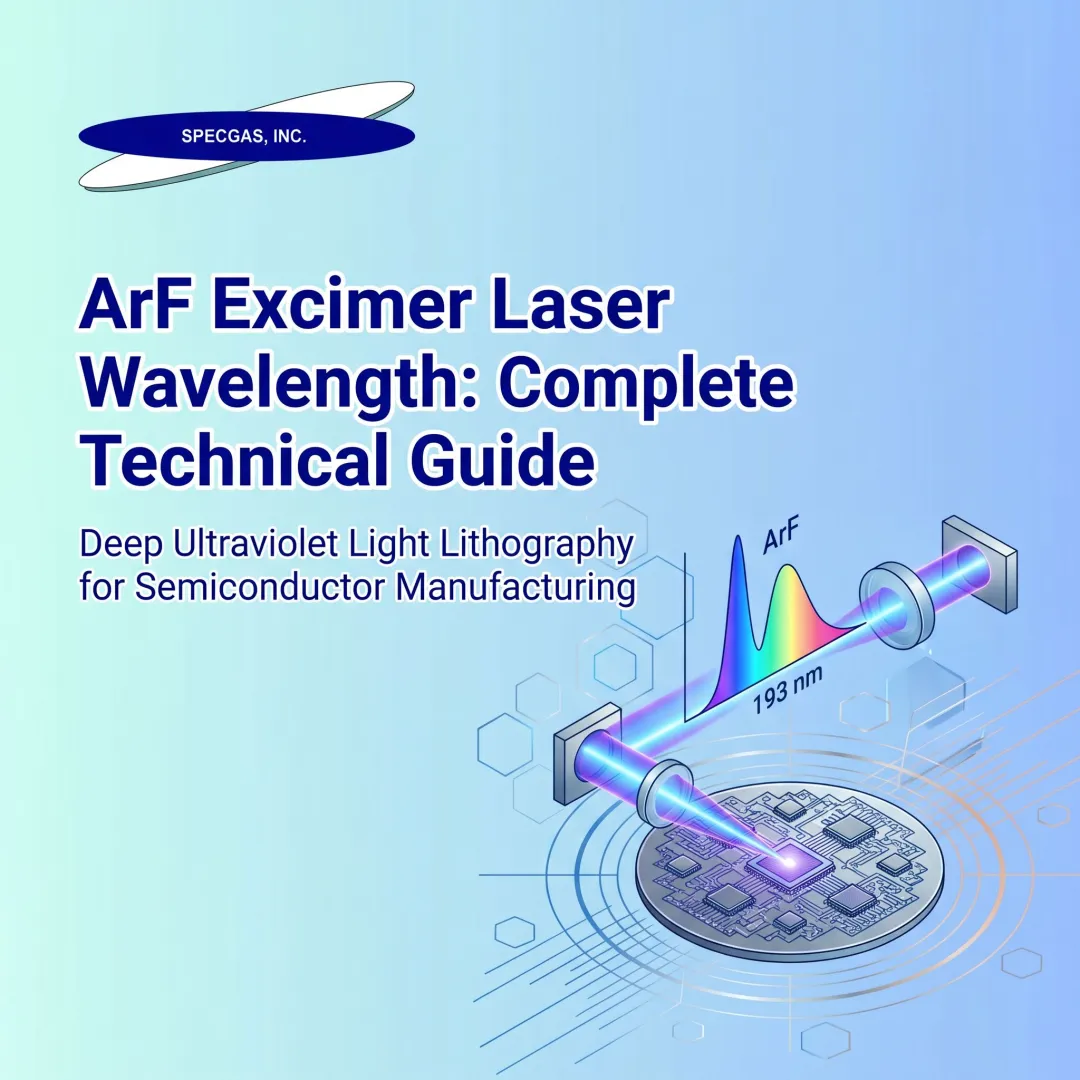
When semiconductor engineers speak of pushing Moore's Law, or when ophthalmologists perform LASIK surgery, the ArF excimer laser is the precision tool making it possible. Operating at 193 nanometers (nm), this single laser type has enabled the microelectronics revolution—shrinking transistor features from 800 nm in the late 1980s to sub-7 nm nodes by 2018—while transforming vision correction surgery worldwide.
ArF stands for argon fluoride, a type of excimer (excited dimer) laser operating in the deep ultraviolet (DUV) spectrum. The same fundamental technology that patterns billions of transistors on a silicon wafer also reshapes corneas with submicron precision, demonstrating the remarkable versatility of this 6.4 electron volt (eV) photon source.
This article covers the science behind ArF lasing, performance characteristics that make the 193 nm wavelength indispensable, and key applications from semiconductor fabs to operating rooms. It also examines a factor that rarely gets top billing but shapes every performance metric: gas mixture quality.
Most engineers focus on optics and beam delivery. But ArF excimer lasers require precisely blended, high-purity gas mixtures to function correctly — and gas quality directly determines uptime, output stability, and total cost of ownership.
TLDR
- ArF lasers emit at 193 nm in the deep ultraviolet range, powered by argon-fluorine excited complexes
- Electrical discharges excite the gas mixture, forming short-lived ArF* molecules that release UV light as they break apart
- Dominant applications: semiconductor photolithography (chip manufacturing) and corneal reshaping surgery (LASIK/PRK)
- Performance governed by pulse energy (10 mJ–1 J), repetition rate (up to 6,000 Hz), and beam quality
- Gas mixture purity and stability are critical: impurity levels as low as 0.1% can degrade laser output by 50%
How ArF Excimer Lasers Work: The Science Behind 193 nm
The Chemical Reaction That Produces UV Light
ArF lasing occurs through a two-step chemical reaction. First, high-voltage electrical energy drives argon gas to react with fluorine gas, forming excited argon monofluoride complexes:
2 Ar + F₂ → 2 ArF*
Second, these excited ArF* complexes undergo spontaneous or stimulated emission and rapidly dissociate back into free atoms:
2 ArF → 2 Ar + F₂ + photons at 193 nm*
The 193 nm photon corresponds to an energy gap of approximately 6.4 eV between the excited and ground states. This photon energy enables ArF lasers to break molecular bonds directly—a phenomenon central to both semiconductor patterning and tissue ablation.
The key to laser operation lies in that rapid dissociation. Unlike conventional lasers that trap light between mirrors to sustain population inversion, the ArF molecule is unstable in its ground state and breaks apart into unbound atoms within picoseconds. This prevents reabsorption of the emitted 193 nm radiation, naturally creating the high laser gain needed for efficient output.
A note on terminology: "Excimer" (excited dimer) is the standard industry term, but ArF is technically an "exciplex" — an excited complex formed between two different atomic species, argon and fluorine, rather than identical atoms.
Laser Cavity Design and Pulse Generation
The gain medium is a precisely controlled gas mixture typically containing:
- 0.1–0.2% fluorine (F₂)
- ~3.5% argon
- Balance of neon or helium as buffer gases
High-voltage nanosecond pulses excite this mixture in rapid bursts. Continuous-wave operation is physically impossible — current technology cannot sustain a discharge with the stability properties ArF lasing requires.
For lithography, raw ArF output isn't usable as-is. The natural emission linewidth runs approximately 1 nm — far too broad for advanced semiconductor patterning. Line-narrowing modules (LNMs) using prism beam expanders and diffraction gratings compress this bandwidth to below 0.3 picometers (pm) in modern systems, eliminating chromatic aberration in projection lenses.
Achieving that spectral purity while maintaining usable power requires a two-stage approach:
- Master oscillator: generates a low-power seed beam at sub-pm bandwidth
- Power amplifier: boosts the seed in a separate chamber to 60–90 W average output
This Master Oscillator Power Amplifier (MOPA) architecture decouples the linewidth and power requirements — each stage is optimized independently rather than forcing a single cavity to do both.

Key Performance Characteristics of ArF Excimer Lasers
The 193 nm wavelength is the cornerstone of ArF laser dominance. In photolithography, minimum resolvable feature size decreases proportionally with wavelength. The shorter the wavelength, the finer the transistor features that can be printed. This positions ArF between longer-wavelength excimer types and the emerging EUV technology:
Excimer Laser Wavelength Comparison:
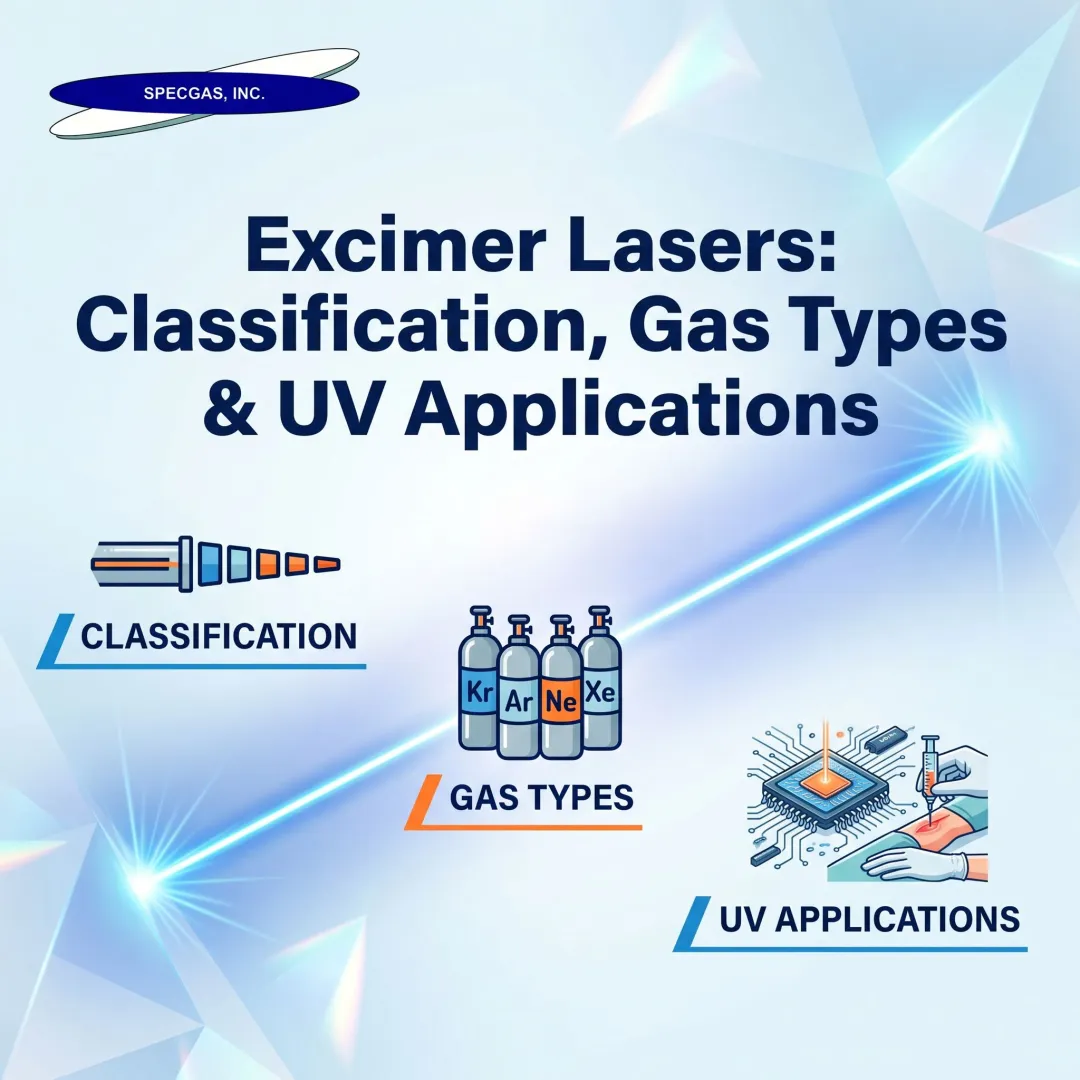
- F₂: 157 nm
- ArF: 193 nm (dominant for advanced lithography)
- KrF: 248 nm
- XeBr: 282 nm
- XeCl: 308 nm (used for medical skin treatments, not ArF applications)
- XeF: 351 nm
ArF occupies the optimal position: short enough for sub-micron resolution, yet long enough to avoid the optical material and atmospheric absorption challenges that affect F₂ lasers at 157 nm.
Performance Metrics:
| Metric | Typical Range | Industry Impact |
|---|---|---|
| Pulse Energy | 10 mJ to 1 J | Gigaphoton GT63A delivers 10/15 mJ per pulse |
| Repetition Rate | 10 Hz to 6,000+ Hz | 6 kHz enables high-throughput wafer scanning |
| Average Power | 10 W to 90 W | 60–90 W required for immersion lithography |
| Wall-Plug Efficiency | 0.2% to 5% | Varies with discharge and optics design |
| Gas Replacement Interval | ~30 million pulses | Driven by halogen depletion and impurity buildup |
| System Lifetime | Several billion pulses | Limited primarily by UV degradation of optical coatings |
Beam Quality: A Built-In Advantage
ArF lasers inherently produce beams with low spatial coherence due to large gain volumes, short resonators, and fast pulse build-up. This results in beams that require homogenizers — but that's not a flaw worth fixing. Low coherence drastically reduces speckle (self-interference), according to Cymer's qualification data, improving Critical Dimension Uniformity (CDU) across the wafer.
Device and Gas Lifetime
Device and gas lifetime were major obstacles in early excimer lasers. Corrosive fluorine gas rapidly attacked electrodes and optics, while discharge byproducts contaminated the gas mixture.
Modern systems address these challenges through advanced materials and gas purification — extending both gas intervals and overall laser service life well beyond what early designs could achieve.
Applications of ArF Excimer Lasers Across Industries
Semiconductor Photolithography
Photolithography is the dominant industrial application, consuming the vast majority of ArF laser production. UV light at 193 nm is projected through a photomask onto a photoresist-coated semiconductor wafer, etching circuit patterns with extreme precision.
Excimer laser lithography was first demonstrated at IBM in 1982 by researcher Kanti Jain, who used 308 nm and 248 nm lasers to achieve high-resolution, speckle-free images. That early research enabled semiconductor scaling from 800 nm features in 1987/1990 down to 7 nm nodes by 2018, sustaining Moore's Law for three decades.
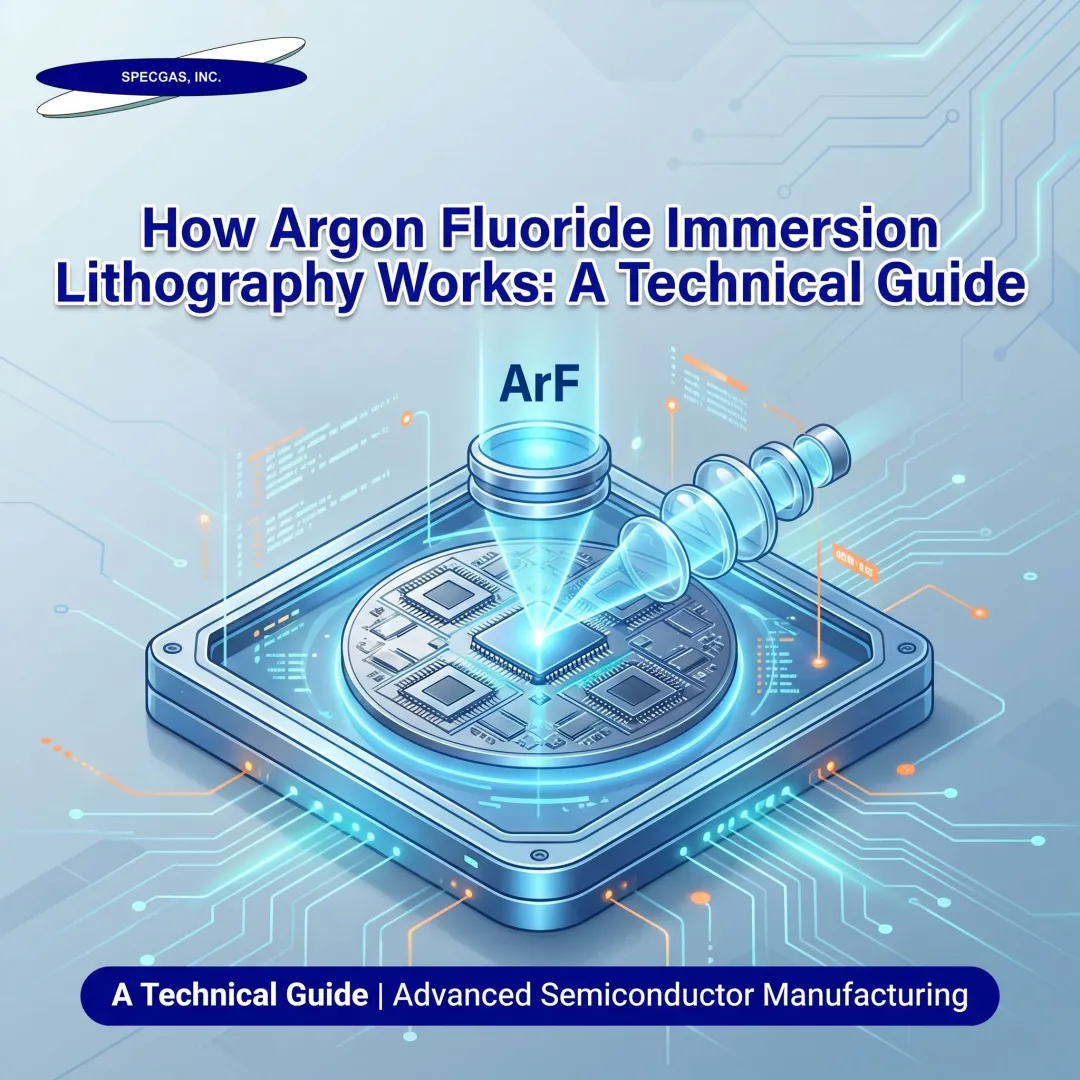
ArF immersion lithography extended this technology's lifespan. By replacing the air gap between the final lens element and wafer with ultrapure water (refractive index ~1.44 at 193 nm), the effective wavelength is reduced. This increases the numerical aperture (NA) beyond 1.0, enabling sub-40 nm half-pitch resolution without switching to a shorter-wavelength source.
Water's refractive index of 1.437 effectively divides the 193 nm wavelength by 1.44, producing an effective wavelength of ~134 nm in the imaging medium — a breakthrough that postponed the transition to extreme ultraviolet (EUV) lithography by nearly a decade.
Even as EUV lithography at 13.5 nm captures leading-edge headlines for 3 nm and 2 nm nodes, ArF remains essential. ASML's 2024 financial reports reveal that ArF immersion systems still account for 41% of lithography unit sales, driven by multi-patterning requirements and cost-effective scaling for mature process nodes.

Ophthalmology — Vision Correction Surgery
The 193 nm wavelength's interaction with corneal tissue is uniquely suited for precision surgery. ArF laser light is absorbed by corneal tissue at extremely short depths—studies indicate a corneal absorption coefficient of 39,900 ± 9,800 cm⁻¹ at 193 nm. This translates to penetration depths limited to the outermost epithelial cells, measured in submicrons.
The 6.4 eV photon energy breaks peptide bonds of corneal collagen molecules directly through photochemical decomposition, not thermal damage. This "cold ablation" process removes tissue with minimal heat-affected zones, preventing scarring and inflammation in surrounding cells.
Two main procedures dominate:
- LASIK (Laser-Assisted In Situ Keratomileusis): A corneal flap is created, and the ArF laser reshapes the underlying stromal tissue before the flap is repositioned
- PRK/LASEK (Photorefractive Keratectomy): The epithelial layer is removed, and the ArF laser directly ablates the stromal surface to correct refractive errors
Both procedures correct myopia (nearsightedness), hyperopia (farsightedness), and astigmatism by precisely altering corneal curvature. The FDA-approved standard for these surgeries relies exclusively on ArF excimer laser technology.
Industrial Micromachining and Material Processing
ArF lasers excel at machining organic materials—polymers, plastics, and certain ceramics—because the 193 nm wavelength produces absorption depths of only a few micrometers. Moderate fluence levels of 1–5 J/cm² enable high-precision material removal with minimal thermal collateral damage.
Key applications include:
- Fiber Bragg grating fabrication: 193 nm lasers inscribe gratings in optical microfibers through two-photon excitation without hydrogen loading or photosensitization treatments
- Pulsed laser deposition (PLD): The 6.4 eV photon energy effectively deposits thin films of amorphous diamond-like carbon (DLC) and complex oxides by dissociating chemical bonds through single-photon absorption
- Polymer and ceramic ablation: Ablation thresholds around 925 mJ/cm² for materials like silicon carbide enable precise cutting and marking with clean edges

Emerging Applications — Fusion Energy Research
ArF lasers have gained serious traction as a candidate for inertial confinement fusion energy. The U.S. Naval Research Laboratory (NRL) began work on ArF laser systems for fusion around 2020–2021, achieving a world-record 200 J pulse energy at their Electra facility.
Why ArF for fusion? Laser kinetics simulations indicate electron-beam-pumped ArF lasers can achieve intrinsic efficiencies exceeding 16%, with projected wall-plug efficiencies around 10%. The 193 nm wavelength and broad native bandwidth (5–10 THz) suppress laser-plasma instabilities, potentially enabling high-gain fusion (>100) with sub-megajoule laser energy.
Commercial ventures including LaserFusionX and Blue Laser Fusion are actively pursuing ArF and deep-UV laser technologies for pilot fusion power plants. If efficiency projections hold at scale, ArF could become the only excimer type with a viable role in commercial power generation.
The Role of Gas Mixture Quality in ArF Laser Performance
An ArF excimer laser is only as good as the gas inside it. The active medium—a blend of argon, fluorine (as F₂), and buffer gas (helium or neon)—must be prepared to exact concentration ratios and high purity levels.
Typical specifications require fluorine concentrations of 0.1–0.2%, argon around 3.5%, with the balance neon or helium. Even minor deviations translate directly into output instability, reduced pulse energy, and accelerated electrode and optic degradation.
Impurities are the enemy. Concentrations as low as 0.1% (1,000 ppm) can degrade laser output power by 50% through UV absorption, scattering, and disruption of discharge kinetics. Moisture reacts with F₂ to form highly corrosive hydrofluoric acid (HF), attacking cylinder walls, valves, and laser optics. Hydrocarbon contaminants deposit carbon residues on electrodes, destabilizing the discharge.
The Gas Lifecycle Challenge
Fluorine is one of the most reactive elements on the periodic table. It will attack cylinder walls, valves, and regulators unless the entire gas path has been properly passivated—chemically conditioned to form a protective metal-fluoride film on interior surfaces.
Poor cylinder treatment causes:
- Reactive gas decomposition
- Concentration shifts over time
- Contamination from corrosion byproducts
- Premature gas change intervals
- Laser performance drift
This is where the gas supplier's technical depth becomes a direct operational variable. SpecGas Inc., for example, produces ArF laser gas blends using a proprietary internal cylinder treatment process rooted in reactive gas R&D going back to 1976. Blends are NIST-traceable for verified concentration accuracy and backed by a Stability Guarantee: a documented commitment to mixture consistency over the full cylinder shelf life.

For semiconductor fabs, research labs, and medical device manufacturers relying on ArF lasers, gas sourcing is not a commodity procurement decision. A properly passivated cylinder can sustain 30 million pulses of stable operation; a standard industrial cylinder may fail at 10 million.
Safety Considerations for ArF Excimer Laser Systems
Operating ArF excimer lasers requires managing three primary hazard categories:
1. Deep UV Radiation (193 nm)
193 nm radiation is invisible to the human eye but highly dangerous. It causes:
- Photokeratitis (corneal burns) at extremely low exposure thresholds
- Erythema (skin reddening and potential carcinogenicity with prolonged exposure)
ICNIRP and ANSI Z136.1 standards dictate strict Maximum Permissible Exposure (MPE) limits—for example, 30 J/m² effective dose for an 8-hour period. UV-rated eye protection and full skin coverage are mandatory when working near open beam paths.
2. Fluorine Gas Toxicity
F₂ is highly toxic, corrosive, and unforgiving at trace concentrations. OSHA sets the Permissible Exposure Limit (PEL) at 0.1 ppm, with an Immediately Dangerous to Life or Health (IDLH) threshold of just 25 ppm — meaning the margin between detectable exposure and life-threatening conditions is razor thin.
Required safety infrastructure includes:
- Ventilated gas cabinets with automated leak detection (alarming at 0.1–0.2 ppm)
- Abatement scrubbers to neutralize fluorine in exhaust streams
- Emergency response protocols and HF antidote kits
- Properly passivated cylinders, manifolds, and delivery lines rated for fluorine service
3. High-Voltage Electrical Hazards
Pulsed power supplies delivering tens of kilovolts present lethal shock risks. OSHA 29 CFR 1910.147 mandates strict Lockout/Tagout (LOTO) procedures, including verified capacitor bleed-down intervals before maintenance.
Modern ArF systems address these hazards through hardware controls — enclosures, interlocks, and continuous gas monitoring. The fluorine gas supply chain itself is a critical control point: using pre-passivated cylinders with certified fluorine-rated fittings is not optional. Facilities sourcing ArF laser gas mixtures should confirm that their supplier's cylinders and delivery components are specifically treated and rated for reactive fluorine service before connecting any supply line.
Frequently Asked Questions
What does 'ArF' stand for in ArF excimer?
ArF stands for argon fluoride—the two chemical species (argon noble gas and fluorine halogen) that combine under electrical excitation to form the short-lived excited complex (technically an exciplex) responsible for 193 nm UV laser emission.
What is the wavelength of the ArF excimer laser?
ArF excimer lasers emit at 193 nm, placing them in the deep ultraviolet (DUV) spectrum. At 6.4 eV per photon, this wavelength drives two primary applications: high-resolution photolithography in semiconductor manufacturing and precision corneal ablation in vision correction surgery.
How does an ArF excimer laser work?
A high-voltage electrical discharge excites a gas mixture of argon and fluorine to form ArF* excited complexes. These complexes emit a 193 nm photon and immediately dissociate into free argon and fluorine atoms. Because the ground-state molecule is unstable, it cannot reabsorb the emitted light, which sustains laser gain.
What are the applications of ArF excimer lasers?
The three main application domains are semiconductor photolithography (chip manufacturing at sub-10 nm nodes), vision correction surgery (LASIK/PRK corneal reshaping), and industrial micromachining of organic materials. Emerging applications include inertial confinement fusion energy research.
What are the main types of excimer lasers?
Common excimer laser types by wavelength: F₂ (157 nm), ArF (193 nm), KrF (248 nm), XeBr (282 nm), XeCl (308 nm), and XeF (351 nm). ArF and KrF are the most widely deployed in semiconductor manufacturing, with ArF dominating advanced lithography nodes.
What conditions can ArF excimer lasers treat (e.g., vitiligo, eczema)?
Skin conditions like vitiligo, psoriasis, and eczema are treated with 308 nm xenon chloride (XeCl) excimer lasers, not ArF at 193 nm. The ArF laser's medical role is corneal reshaping in LASIK/PRK surgery, where its 193 nm wavelength is precisely matched to tissue ablation depth in the cornea.