
Introduction
Gas detectors are only as reliable as their last calibration. In industrial facilities, research laboratories, and confined space operations, an uncalibrated detector can give false confidence in a hazardous atmosphere—creating life-threatening conditions your team believes are safe.
Calibration drift is the gradual degradation of sensor accuracy that occurs in all gas detectors. Electrochemical and catalytic bead sensors shift over time due to chemical aging, environmental exposure (extreme temperatures, high humidity), and everyday use.
According to OSHA's Safety and Health Information Bulletin, chemical degradation of sensors and electronic components occurs naturally over time, making regular calibration a regulatory requirement — not a best practice suggestion.
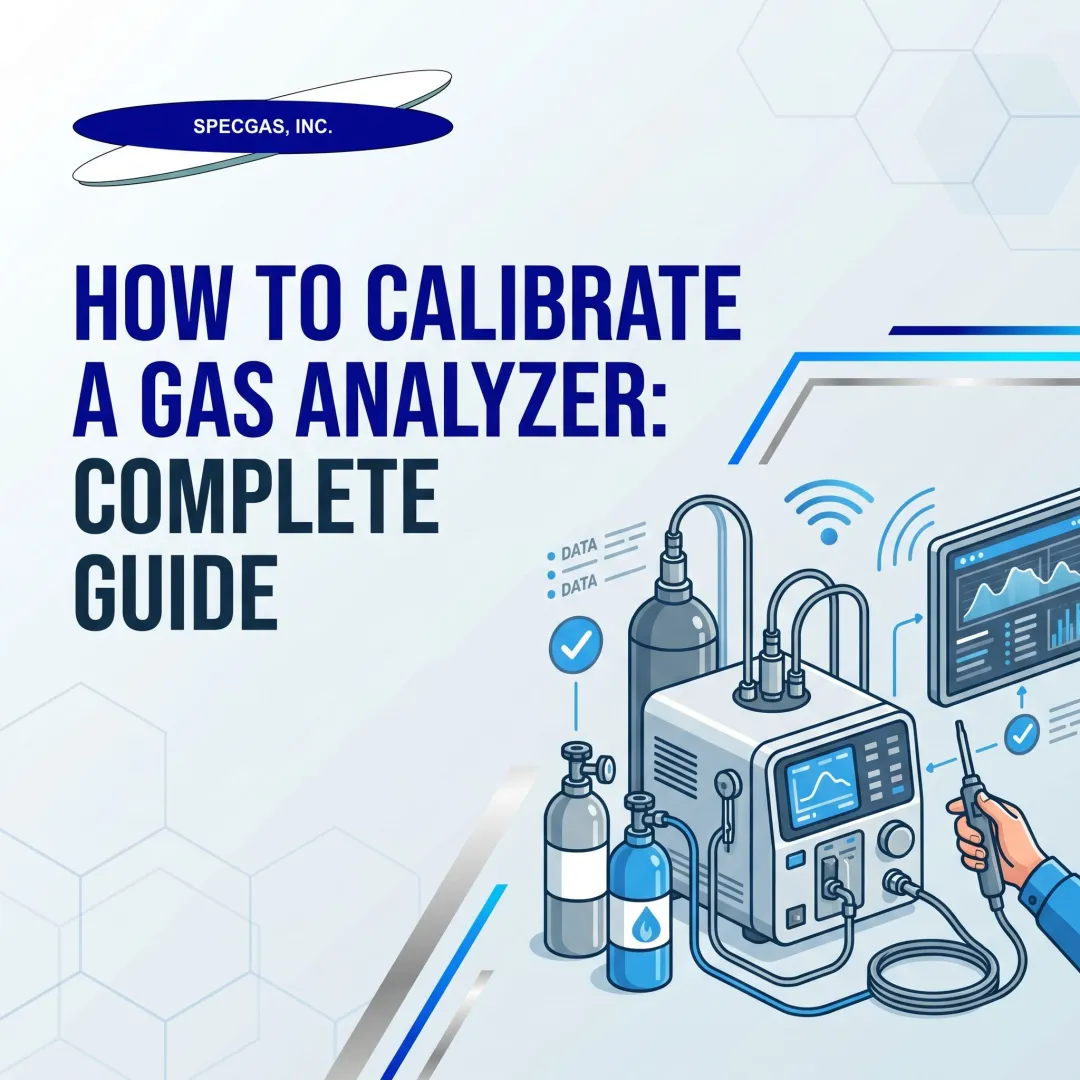
Understanding drift is step one. From there, this guide walks through the full calibration process: what equipment you need, step-by-step procedures, OSHA-recommended intervals, the difference between calibration and bump testing, and the mistakes most likely to invalidate your results.
TL;DR
- Gas detector calibration exposes sensors to a known gas concentration and adjusts readings to match, correcting sensor drift and restoring accuracy
- Required equipment: NIST-traceable calibration gas, a demand-flow regulator, calibration adapter, and a clean-air environment
- Calibration involves zero calibration (establishing clean-air baseline) and span calibration (aligning readings to known gas concentration)
- Calibrate every 3–6 months per manufacturer guidelines, plus after any event that could affect sensor accuracy
- Bump tests confirm sensors respond and alarms trigger, but they don't measure or correct accuracy like full calibration does
What You Need to Calibrate a Gas Detector
Calibration accuracy depends entirely on the quality of your tools and gas. Get either wrong, and the resulting reference point is unreliable—regardless of how carefully you follow the procedure.
Equipment and Hardware
Standard calibration equipment includes:
- Gas detector: Fully charged and warmed up per manufacturer guidelines (typically 1–5 minutes, though some O₂ sensors require up to 60 minutes)
- Calibration gas cylinder: Must include a certificate of analysis verifying concentration
- Demand-flow regulator: Matched to the cylinder valve and detector manufacturer specifications (critical: MSA ALTAIR devices require 0.25 LPM, while Honeywell BW and Dräger typically use 0.5–1.0 LPM)
- Calibration tubing: Polyurethane for non-reactive gases, PTFE/Teflon-lined for reactive gases
- Calibration cap or adapter: Fitted to the detector's sensor port to ensure proper gas flow
Calibration Gas Selection
Calibration gas must match the specific gases your detector monitors. For a 4-gas confined space detector, this typically means a multi-component mix of:
- O₂ (oxygen, typically 20.9% or specified level)
- CO (carbon monoxide)
- H₂S (hydrogen sulfide)
- Combustible gas (methane, pentane, or other LEL standard at manufacturer-specified concentration)
NIST-traceable gas standards are required per OSHA guidance to ensure the reference concentration is verifiable. OSHA SHIB 09-30-13 explicitly states: "Test gas used for calibration gas should always be certified using a standard traceable to the National Institute of Standards and Technology (NIST)."
When sourcing calibration gas, look for suppliers who blend in-house and can provide stable reactive gas mixtures (H₂S, HCN, Cl₂, formaldehyde) with documented shelf life. SpecGas uses a proprietary internal cylinder treatment process that extends reactive gas stability, ensuring consistent concentrations over the full cylinder lifespan.
Check expiration dates on every cylinder before use. Reactive gases have limited shelf lives:
- Non-reactive gases (CO, O₂, LEL): 28 months
- Reactive gases (H₂S, SO₂): 19 months
- Highly reactive gases (Cl₂): 6–7 months
Expired gas introduces error into the calibration reference point, invalidating the entire procedure.
How to Calibrate a Gas Detector: Step-by-Step
While specific steps vary by manufacturer and model, this general procedure reflects the standard two-point calibration process (zero + span) used across most portable and fixed gas detectors. Always consult the manufacturer's manual for device-specific instructions.
Step 1: Prepare Your Equipment and Environment
Instrument warm-up:
- Power on the detector and allow it to warm up per manufacturer guidelines
- Some sensors require 1–5 minutes, but certain O₂ sensors need up to 60 minutes to stabilize
- Sensors moved to new environmental conditions may need 24 hours to acclimate
Equipment inspection:
- Check calibration cap, tubing, and regulator for cracks, blockages, or contamination
- Verify the regulator flow rate matches your detector's requirements (0.25 LPM for MSA ALTAIR, 0.5–1.0 LPM for most others)
- Confirm calibration gas has not expired
Environment:
- Perform calibration in an area known to be free of target gases or interfering vapors
- Don't calibrate where gases are actively present
- Match the temperature and humidity of the actual work environment as closely as possible
Step 2: Perform the Zero Calibration (Fresh Air Zero)
Expose the detector to clean, uncontaminated air (or certified zero air) and initiate the zero function per the manufacturer's menu or button sequence.
This step resets the sensor's baseline so the instrument reads zero in the absence of target gases. A contaminated zeroing environment will corrupt all subsequent readings. Even trace amounts of target gases at sub-alarm levels will offset the baseline, making every subsequent reading unreliable.
Step 3: Apply Calibration Gas (Span Calibration)
Gas application procedure:
- Attach the calibration adapter to the sensor port
- Connect the regulator and tubing to the gas cylinder
- Open the cylinder and allow calibration gas to flow at the manufacturer-specified flow rate (typically 0.5–1.0 LPM for demand-flow regulators, 0.25 LPM for MSA devices)
- Initiate the span calibration mode on the instrument
Interpreting calibration outcomes:
- Pass with no adjustments: Sensors are reading accurately within acceptable limits—no internal correction needed
- Pass with adjustments: The instrument detected and corrected for sensor drift; sensors are still functional but have lost some sensitivity
- Fail: Sensor degradation is beyond recoverable range (often <50% span reserve)—the sensor likely needs replacement

Step 4: Allow Sensors to Stabilize and Confirm Readings
After applying calibration gas, allow sufficient stabilization time before confirming the final reading:
- Electrochemical sensors typically stabilize in 30–90 seconds (T90 values)
- Reactive gases may require longer conditioning of the gas path
- Don't close the cylinder or disconnect tubing prematurely, as this can cause an inaccurate span reference
Step 5: Record and Label the Calibration
OSHA SHIB 11-26-2024 recommends maintaining calibration records for the life of the instrument to track sensor drift trends and identify instruments prone to erratic readings.
Record the following information:
- Calibration date and technician name
- Calibration gas lot number and concentration
- Gas expiration date
- Instrument's pre-calibration readings
- Instrument's post-calibration readings
- Calibration outcome (pass with/without adjustments, fail)
Apply a calibration sticker to the device showing the calibration date and next due date.
How Often Should You Calibrate a Gas Detector?
OSHA does not prescribe a specific calibration interval. Instead, OSHA's position is that employers must follow the manufacturer's recommendations, effectively making the manufacturer's guidelines the OSHA standard for that instrument.
OSHA requires gas monitor use in specific applications:
- 29 CFR 1910.146: Permit-required confined spaces
- 29 CFR 1910.120: Hazardous waste operations and emergency response (HAZWOPER)
Manufacturer Calibration Intervals
| Manufacturer | Recommended Interval |
|---|---|
| Industrial Scientific | Monthly (every 30 days) |
| MSA Safety | 2–6 months (Standard XCell); up to 24 months with TruCal technology |
| Honeywell BW | 180 days (6 months) |
| Dräger | 6 months |

Most manufacturers recommend calibration every 3–6 months under typical conditions — infrequent users should calibrate before each use regardless of elapsed time. Scheduled intervals aren't the only trigger, though. Certain events require immediate recalibration no matter when the last calibration occurred.
Triggers for Immediate Out-of-Schedule Calibration
Calibrate before returning the instrument to service after any of these events:
- Exposure to high concentrations of target gases (over-range events)
- Physical drops or immersion in liquids
- Exposure to sensor-poisoning agents (silicones, halogenated hydrocarbons, sulfide gases)
- Failed bump test
- Change in custody or extreme environmental changes
A detector that skips recalibration after any of these events may read inaccurately — and in confined space or HAZWOPER applications, that's a compliance and safety risk.
Calibration vs. Bump Testing: Key Differences
What a Bump Test Does
A bump test (also called a functional test) briefly exposes the sensor to a challenge gas at a concentration above the alarm setpoints to confirm that:
- Sensors respond to gas
- All alarms activate (audible, visual, vibration)
It does NOT measure or correct the accuracy of gas readings. According to the ISEA 2010 guidance, a bump test is a qualitative check—it verifies gas reaches the sensor and alarms trigger, but it cannot correct quantitative drift.
What Full Calibration Does
Calibration establishes or resets the sensor's quantitative reference point, correcting for drift so the instrument delivers accurate concentration readings (e.g., 25 ppm H₂S vs. simply "gas detected").
The ISEA recommends verifying operational capability before each day's use via bump test or calibration check. Full calibration is warranted when readings fall outside acceptable tolerance—typically ±10–20% of the test gas concentration.
The Critical Misconception
Because bump tests and calibration address different failure modes, one cannot substitute for the other. Passing daily bump tests does not eliminate the need for scheduled full calibrations. Sensors can drift gradually in ways that still allow alarm triggering while producing inaccurate concentration readings. A sensor might successfully trigger an alarm at 50 ppm H₂S (passing the bump test) while actually reading 35 ppm on the display—creating a false sense of precision.

Treat bump tests as your daily go/no-go check and full calibration as your periodic accuracy reset. Both are required; neither is optional.
Common Mistakes When Calibrating Gas Detectors
Using Expired, Incorrect, or Low-Quality Calibration Gas
The calibration is only as accurate as the reference gas used. Using gas past its expiration date—especially reactive mixtures like H₂S (19-month shelf life) or Cl₂ (6–7 months)—produces a false calibration that gives the instrument an inaccurate reference point.
Additional errors:
- Using the wrong gas species or concentration for the target detector
- Using gas without a verified certificate of analysis
- Using non-NIST-traceable gas
NIST-traceable gas from a certified supplier ensures the reference concentration is reliable and meets OSHA requirements. SpecGas produces NIST-traceable calibration gas mixtures specifically formulated for reactive and toxic gas applications.
Zeroing in a Contaminated Environment
Performing the zero step in an area where trace amounts of target gases are present—even at sub-alarm levels—will offset the baseline. This causes every subsequent reading to be systematically incorrect.
When the detector returns to truly clean air, it will display negative readings and suppress actual hazard detection. Always zero in verified clean air or use certified zero air gas.
Ignoring a Failed Calibration Result
If a sensor fails span calibration, continuing to use the instrument without sensor replacement or manufacturer service creates a false sense of safety. A failed calibration means the sensor can no longer produce a reliable signal. That's not a calibration issue more adjustment can fix.
When calibration fails, take one of these steps:
- Replace the sensor before returning the instrument to service
- Send the unit to the manufacturer for evaluation and repair
Calibrating in Conditions That Don't Reflect Actual Use
A successful calibration in a climate-controlled office doesn't guarantee accuracy in the field. Sensor responsiveness varies with temperature and humidity, so calibrating in conditions that don't match actual use can reduce real-world accuracy even when the calibration itself passes.
Environmental factors that affect sensors:
- High humidity (90–100% RH causes hydroxylation, reducing sensitivity)
- Extreme temperatures (sudden drops can cause temporary reading spikes)
- Airborne particulates
Ideally, calibrate in environmental conditions similar to the actual workplace conditions.
Frequently Asked Questions
How is a gas detector calibrated?
Calibration involves two steps: zeroing the instrument in clean air to establish a baseline, then exposing it to a known concentration of NIST-traceable calibration gas (span calibration) so the sensor output aligns to that reference. If the reading falls outside acceptable tolerance, adjustments are made until it does.
How often do gas detectors need to be calibrated?
OSHA defers to manufacturer guidelines. Most manufacturers recommend calibration every 3–6 months under typical conditions, with additional calibration required after any sensor-damaging event, exposure to over-range gas concentrations, physical damage, or a failed bump test.
What is the standard for calibration of a gas detector?
OSHA's calibration guidance (SHIB 11-26-2024) requires following manufacturer instructions and using calibration gas certified as NIST-traceable. The ISEA recommends verifying instrument operability before each day's use through bump testing or calibration checks.
What is a bump test for a gas detector?
A bump test (functional test) briefly exposes the sensors to challenge gas above alarm setpoints to confirm that sensors respond and all alarms activate. It's a fast daily check — typically taking under a minute — that confirms the detector is working before you enter a hazardous environment.
What is the difference between bump testing and calibration?
Bump testing is a qualitative check confirming sensors and alarms function, while calibration is a quantitative process that establishes or restores the accuracy of gas concentration readings by correcting sensor drift. Most safety programs require both: bump tests daily (or before each use) and full calibration on a scheduled interval.
Does OSHA require bump testing?
OSHA does not explicitly mandate bump testing by name, but endorses the ISEA's guidance, which calls for verifying detector function before each day's use. State OSHA plans may go further — California Title 8 Section 5157, for instance, explicitly requires calibrated instruments for confined space entry.